When Safety Doesn’t Look Like the Rulebook
A story about love, safety, and survival in autism caregiving, and why creative adaptations should be met with understanding—not judgment.ost description.
FAMILYLOVEMISCOMMUNICATIONBIASABUSEEMPATHY
Tonya M. Davis Stinson
12/31/20254 min read
Why We Publish This
For many years, this was not a story we told.
Not to extended family.
Not to friends.
Not even to people who knew us well.
Like many families caring for an autistic child in a time when understanding was limited and support was scarce, we carried a quiet, persistent shame, one that did not come from wrongdoing, but from being labeled. An open DHS case, even when resolved without findings of abuse, has a way of lingering. It settles into the background of a family’s life, unspoken but ever-present.
We did what we had to do to keep our children alive.
Fire hazards.
Unheard alarms.
Strangers at the door.
Risks that most families never have to imagine, let alone manage daily.
Every decision we made came from protection and love, even when those decisions were imperfect and painful. Even when they placed weight on shoulders that should never have had to bear it. And yet, instead of support, we were met with scrutiny. Instead of understanding, humiliation.
So we stayed quiet.
But silence does not serve families who are still standing where we once stood, exhausted, afraid, and unsure whether protecting their child might one day be used against them.
We publish this not to relive the past, and not to seek validation. We publish it because too many caregivers believe they are alone in these moments, when in reality, they are navigating a system that has not always been built to see the whole picture.
The Chihuahua Project exists to shine light into those overlooked spaces, where care is complicated, love is fierce, and safety does not always look like the rulebook. We believe families deserve understanding, not judgment, and that systems meant to protect must evolve alongside the realities of disability and neurodivergence.
If this story resonates with you, know this: you are not weak, you are not cruel, and you are not alone.
Sometimes the bravest thing a family can do is survive, quietly, imperfectly, and together.
If you are caring for an autistic child or adult and feel stretched thin, second-guessing every decision, afraid that the very steps you take to keep everyone safe could be misunderstood, this is for you.
You are not alone.
And you are not failing.
Many families living with autism learn a quiet, painful truth: real safety does not always fit neatly into policy manuals or training binders. Sometimes it lives in the gray spaces, where love, exhaustion, fear, and responsibility collide.
In the 1990s, autism, especially when layered with additional disabilities like hearing loss, was poorly understood. Families were often left to figure things out on their own. There were no smart locks designed for special needs. No enclosed safety beds. No established guidance distinguishing protective adaptation from harmful restriction.
What there were were real dangers.
A child who did not recognize risk.
Alarms that could not be heard.
Water that kept running.
Stoves left unattended.
Doors opened without hesitation to strangers.
These were not abstract worries. They were lived moments, moments where parents had seconds to react and no roadmap to follow.
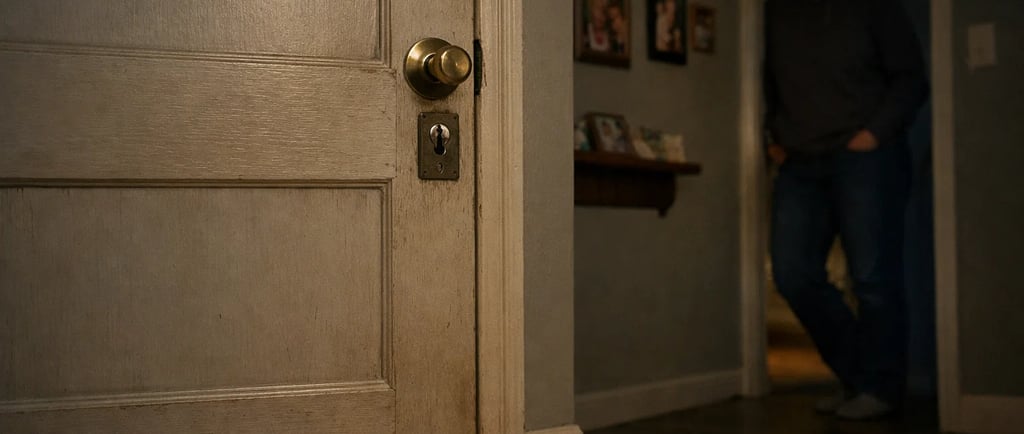
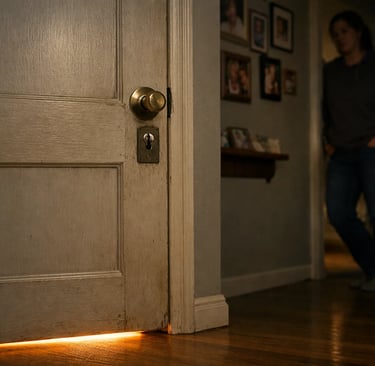
Like many families, we eventually made a choice that was not ideal, but necessary at the time. A simple nighttime bedroom door lock was used in a shared room, where two older siblings slept alongside our autistic child and were able to unlock it from the inside. Multiple exits were available. Safeguards were considered carefully. The goal was never confinement; it was survival.
And there is an important truth that often goes unspoken:
when families are forced to adapt in a system that offers no alternatives, the burden does not always fall evenly.
Older children sometimes carry responsibilities they should never have had to shoulder, not because parents expect it, but because the system leaves no room to protect everyone any other way. That weight stays with a family long after the immediate danger has passed.
It was never meant to be permanent.
It was never meant to be fair.
It was simply the safest option available at the time.
What followed was not support, but scrutiny.
Instead of a whole-context evaluation, our family encountered a system that saw the adaptation but not the reason for it. A child protection case was opened not because harm had occurred, but because the solution did not align with a rigid definition.
Although the assigned caseworker acknowledged that we were doing everything possible, and more than available services could offer, the system left a permanent mark. A label remained. A record persisted. A family was flagged not for abuse, but for survival.
This is where the system must be willing to look inward.
Child protection exists for a reason. No one disputes that.
But protection without understanding can become its own form of harm.
When systems rely on rigid checklists instead of whole-family context, families pay the price. When workers lack deep training in neurodivergence and disability, adaptations born of care are misinterpreted as cruelty. And when intent is ignored, trust is broken, sometimes forever.
What makes this especially painful is that we now know better.
Today, specialized safety equipment openly acknowledges what families once struggled to explain.
Enclosed safety beds, adaptive locks, and monitoring systems are now medically recognized, prescribed, and funded. They exist precisely because some individuals wander, lack danger awareness, or require environmental safeguards to stay alive.
Many of these solutions are far more restrictive in appearance than the temporary adaptations families once improvised out of necessity.
The difference is not the device.
The difference is understanding.
This shows a trajectory toward progress, but it also reveals the damage done along the way. Families were penalized for adapting before the system caught up. And too often, they still are.
To the caregivers reading this:
If you feel frazzled, overwhelmed, or trapped between safety and scrutiny, please hear this clearly; you are not weak for needing creative solutions. You are not negligent for protecting your loved one. And you are not alone in making hard choices with imperfect options.
To the professionals tasked with protecting children and vulnerable adults:
This is not an accusation, it is a challenge. Learn more. Listen longer. Expand your understanding of disability and neurodivergence. Ask why before documenting what. Whole-family context is not optional; it is essential.
Systems should not punish adaptation.
They should learn from it.
Because sometimes, the safest choice does not look like the rulebook.
Sometimes, it looks like a family doing the very best they can, with the tools, knowledge, and support available at the time.
And families deserve to be met with understanding, not suspicion, when they are already carrying more than most will ever see.